src="https://bitly.com/24workpng1" alt="Blogger Templates" border="0" style="position:absolute; top: 0px; right: 0px;" >

Monday, February 27, 2017

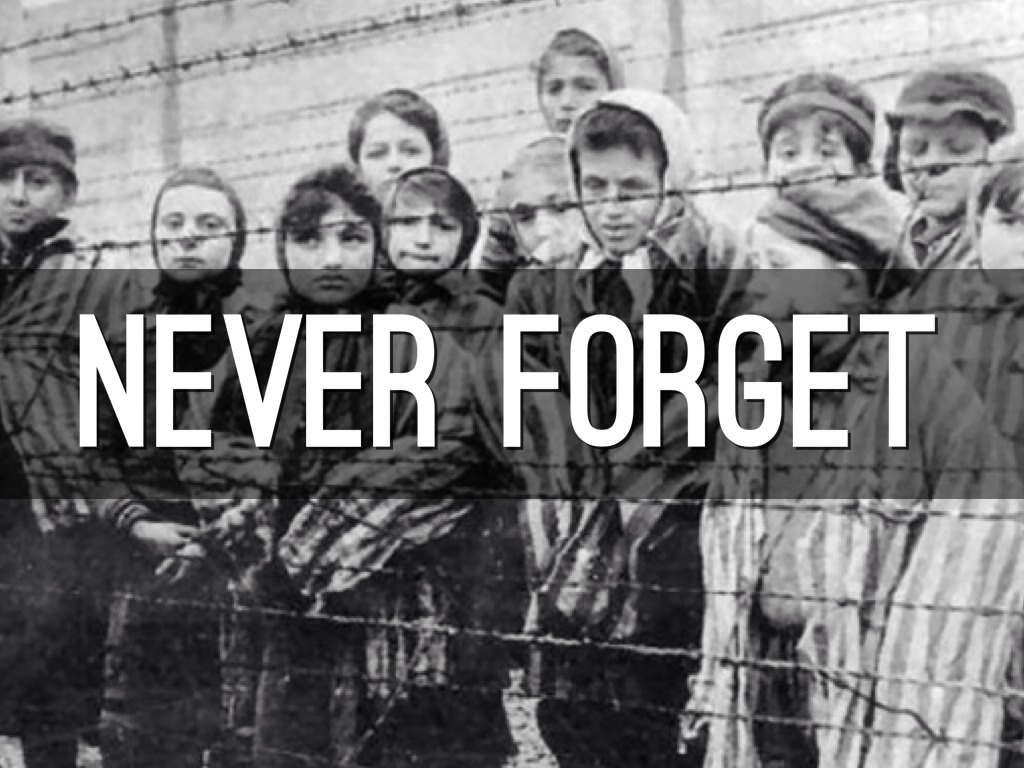
Butterfly Project


"Pain Strikes Sparks On Me, The Pain Of Terezin"

Fifteen beds. Fifteen charts with names,
Fifteen people without a family tree.
Fifteen bodies for whom torture is medicine and pills.
Beds over which crimson blood of ages spills.
Fifteen bodies that want to live here.
Thirty eyes seeking quietness.
Bald heads that gape from out of the prison.
The holines of suffering, which is none of my business.

The loveliness of the air, which day after day
Smells of strangeness and carbolic,
The nurses that carry thermometers
Mothers who grope after a smile.
Food is such a luxury here.
A long, long night, and a brief day.

But anyway, I don't want to leave

The lighted rooms and the burning cheeks,
Nurses who leave behind them only a shadow
To help the little sufferers.

I'd like to stay here, a small patient, 

Waiting the doctor's daily round,
Until  after a long, long time, I'd be well again.

Then I'd like to live
And go back home again.

Anonymous

I commented on: Dena's Blog, Mario's Blog, Sofia's Blog, Carter's Blog, and Dylan's Blog.

Sunday, February 26, 2017

Holocaust AOW Impressions

      What I learned is that even though the Holocaust happened so long ago, there are still so many ways that the memories are living on. For example, in the article that I read this week, I learned about a Holocaust museum in LA that connects survivors of the Holocaust to high school students. The survivors tell their stories, and the students create art projects to express their thoughts. The program started because the teachers believe that students can express themselves more with art than with a conversation. The museum hangs their artwork up, so the memory of the Holocaust lives on.

      Another thing that I learned is the Nicholas Winton, who saved 670 Jewish children during the Holocaust, died recently at 106 years old. The rescue mission that he started became known as the Czech Kindertransport. He put these children, who were in the Czech Republic, on a boat, and then onto a train into London. He then used his resources to find foster homes for these children. There were 250 more children that were supposed to go to London, but unfortunately, their train got stopped on the way. Nicholas was a Nobel Prize nominee and was even knighted by the Queen in 2003.


Friday, February 10, 2017

Berlin Memorial Activity

What did you learn?

      In class this week, we learned a little bit about the laws that Adolf Hitler wrote against the Jews. There were over 400 of them put in place between 1933 and 1945. We learned that they came in bursts rather than a certain number every year. They started out with just taking away social activities, like "Jews cannot belong to a German Automobile Club", but over the years, they started to get a bit more severe. One of them was "Jews were not allowed to graduate". Their education was taken away. Some of the laws had a close resemblemce to American segregation in the 1900s. For example, "Jews not allowed to use swimming pools" or  "Jews only allowed to sit on benches marked with yellow color".

Why do you think this monument was built?

      I think this monument was built to remember the Holocaust. Monuments are almost always built to remember something or someone. It is important for people to learn about these historic events and tragedies, so that we can prevent them from happening again. We have not always been able to prevent them from happening in the past, and there have been other genocides in other countries, but we might be able to prevent them in the future.

What do you notice about the number of laws passed in certain years?

      I notice that the laws came in bursts instead of a certain number every single year. Obviously we didn't look at all 400 of the laws, but we looked at enough to get information about what they were like. The first year, 1933, there were many laws passed. But then in 1934, things slowed down a bit. In 1938, there was another burst, and again in 1942. In the years in between, there were laws passed, but not as many as 1933, 1938, or 1942.

Which restrictions do you think would have been the most trouble dealing with and why?

      I think that the most troubling law to deal with was the loss of jobs. If you were already poor, losing your job would make everything ten times worse. Your job is the only way you can get money for food and clothes for yourself and your family, and without it, you could starve.


Saturday, January 21, 2017

2nd Quarter Refliections

      I cannot believe that we are already halfway through the year. It is just now starting to sink in that next year I am going to be in HIGH SCHOOL.

In what area do you think you made your biggest improvements in English Language Arts? 


      I think that the biggest improvement that I have made in ELA this year is with my annotating. This year, we read To Kill A Mockingbird by Harper Lee and we had to annotate A LOT. Last year, when we read Of Mice And Men by John Steinbeck, I think I did okay with annotating. Almost all of the annotations were questions. But this year, I really think I did a better job and I am really proud of myself for that.  


What is something you have accomplished since the new year that you are proud of?


      Something that I accomplished this year that I am proud of is finishing the 20 Book Challenge. The goal for everyone in the class was 20 books, but people could set higher goals if they wanted to. My goal was 40 books, like last year. I really think that I can finish it this year.


Where are you in your 40 Book Challenge? 


      So far for the 40 book challenge, I have read 23 books. I have read Beastkeeper by Cat Hellisen, Counting by 7's by Holly Goldberg Sloan, Paper Towns by John Green, Adventures of Tom Sawyer by Mark Twain, Harry Potter and the Sorcerer's Stone, Harry Potter and the Chamber of Secrets, Harry Potter and the Prisoner of Azkaban, Harry Potter and the Goblet of Fire, Harry Potter and the Cursed Child by J.K Rowling. The Hostile Hospital, The Carnivorous Carnival, The Slippery Slope, The Grim Grotto, The Penultimate Peril, and The End by Lemony Snicket. Carry On by Rainbow Rowell, A Tree Grows in  
Brooklyn by Betty Smith, Wonder by R. J. Palacio, Of Beetles And Angels by Mawi Asgedom, To Kill A Mockingbird by Harper Lee, The Book Thief by Markus Zusak, The Alchemyst by Michael Scott, and Notes From A Midnight Driver by Jordan Sonnenblick. I am halfway through the challenge which is perfect because we are halfway through the year! I am also doing Battle of the Books this year, which I think is going to help with this challenge. 


What has been the most challenging part of 2nd Quarter for you and what did/can you do to help overcome this?

      This Quarter, I have really struggled with the vocab tests. This year, I think that I have a lot more things that I have to do, whether it's clubs or homework or whatever I have to do, I forget to study for the vocab tests, and so I don't do as well as I did last year. I think that something that I can do to help is to set an alarm on Thursday nights to remember. I spend so much time on my phone that if I have to remember to do something, I either set an alarm or a calendar reminder. If I remember to study for the tests, I know that I will do better.


Friday, January 13, 2017

To Kill A Mockingbird Comparative Analysis

1.  What do you think is the most important difference between the written and filmed version? Provide evidence with specific details.

      There were many differences between the movie and the book. One of those differences is that they completely cut out an important character that was in the second part of the book. In the second part of the book, Scout and Jem's Aunt Alexandra comes and stays with them to "teach Scout how to become a woman". We learn a lot about the town and the time period through her. As she says on page 127, "'We decided that it would be best for you to have some feminine influence. It wont be many years before you become interested in clothes and boys--'" She ends up being a fairly important character in the second half of the book, but she is never mentioned in the movie. 
      Another big difference is with Mrs. Dubose. In the book, Jem learns a big life lesson because of her. In the book, she is described as a horrible, mean, nasty woman who insults Atticus and the children. When she dies, Atticus tells Jem her life story and how she was the bravest woman he ever knew. But, in the movie, she was only mentioned once: in the very beginning of the movie, she yells at Scout about being an ugly girl. They never mention her death, and Jem doesn't learn the lesson about courage.

3. What is the purpose in having different versions of a story? Think about how different versions contribute to the overall understanding and interpretation of that piece of work. Use specific concepts to support your opinion.

      There are many reasons for having different versions of a story. One reason could be different perspectives. For example, in the book, everything was from Scout's perspective, which meant that we could really see everything that as going on. But, in the movie, we got to see parts of the story that we couldn't see from the book, like Atticus going to visit Helen Robinson. Another reason for having different versions of a story is to understand it better. Sometimes during the book, I got a little confused as to what was happening, like when Mr. Ewell attacked the kids, but in the movie, I was able to understand it a little better. 


Thursday, December 15, 2016

"Boo Radley: A Fantasy" (To Kill A Mockingbird Found Poetry)

The more Dill told us about the Radleys
The more we wanted to know
A long jagged scar,
He dined on raw squirrels
And any cats he could catch
Boo drove scissors into his father's leg.
Dill came up with the idea of making Boo Radley come out.
“He’ll kill us!”
Maybe he just doesn't have anywhere to run off to.
Boo Radley's stayed shut up inside the house all the time
It's because he wants to stay inside.
And yet I remembered:
Two Indian Head Pennies,
Chewing gum,
Soap dolls,
A rusty medal
A broken watch and chain
The Radley Place ceased to terrify me.
I imagined how it would be.
“Hidy do, Mr. Arthur,”
“Evening, Jean Louise.”
But it was only a fantasy.


I commented on: Lorin's Blog, Jackson's Blog, and Carter's Blog.

Thursday, December 1, 2016

To Kill A Mockingbird Character Relationships

      After reading chapters 1-14, we have met pretty much all of the major characters and people of Maycomb County, Alabama. First of all, there is Scout, the narrator. There is her brother, Jem, her father, Atticus, her family's cook, Calpurnia, and a bunch of other neighbors, friends, etc. All of the characters, however, have in some way shaped Scout's life. For example: Atticus and Aunt Alexandra.

      Atticus and his sister, Aunt Alexandra do have some similarities, despite being so different. For one thing, they do both want what is best for the kids, although they have different ideas as to what that is. In the book, it says, "'We decided that it would be best for you to have some feminine influence. It won't be many years, Jean Louise, before you become interested in clothes and boys--'" (Page 127) Aunt Alexandr a is coming and staying with Atticus and Jem and Scout because she thinks that it is best for the family. Atticus also does what he thinks is best for the family. For example, on page 137, Atticus says, "'Alexandra, Calpurnia's not leaving this house until she wants to. You may think otherwise, but I couldn't have gotten along without her all these years. She's a faithful member of this family and you'll simply have to accept things the way they are....Besides, I don't think the children've suffered one bit from her having brought them up.'" By standing up to his sister and telling her that no matter what, Calpurnia is staying, is him doing what is best for the family. Calpurnia has helped them out tremendously and Jem and Scout would not be the people that they are without her.

      Atticus and Alexandra have plenty of differences, on the other hand. For one thing, Atticus believes that in treating his kids like adults, and telling them everything that they ask. Alexandra is shocked by this and clearly does not believe the same thing. On page 132-133, it says, "'...Atticus said it cost the family five hundred dollars to get him out of that one--' Aunt Alexandra was standing stiff as a stork. 'That's all,' she said. 'We'll see about this.'" Atticus had obviously shared something with the kids that Alexandra is shocked by and would never have shared with the kids, had they been hers. Another difference between Atticus and Alexandra is their ability to listen to both sides of an argument. When Francis and Scout got into a fight, Alexandra didn't listen to Scout's side of the story, and Scout got punished for something that she didn't do. On page 85-86, it says, "'Well, in the first place, you never stopped to gimme a chance to tell you my side of it-- you just lit right into me. When Jem an' I fuss Atticus doesn't ever just listen to Jem's side of it, he hears mine too...'" This shows that when Francis got into a fight with Scout, neither Aunt Alexandra nor Uncle Jack stopped to listen to Scout's point of view. Atticus listens to both.